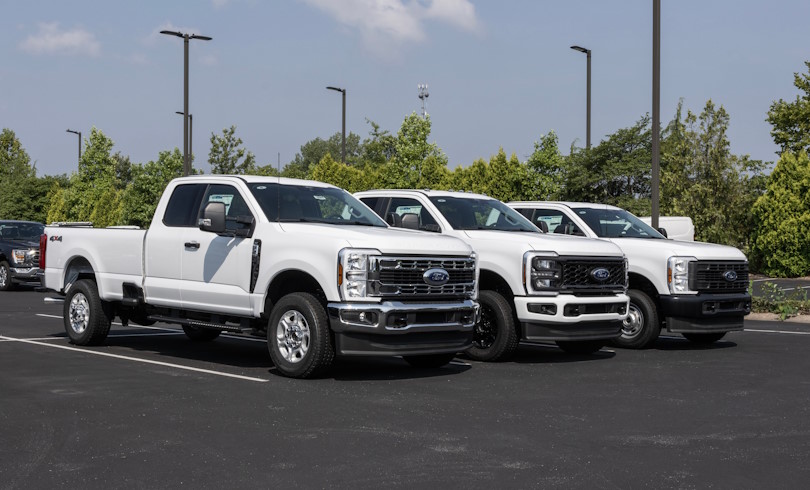
If you’re shopping for a heavy-duty Ford truck, chances are you’ve landed on the same question many buyers ask: what’s the difference between the F250 and F350? At first glance, these two Super Duty trucks look nearly identical, but when it comes to capability, towing, and use cases, the differences matter—especially if you plan to haul, tow, or work your truck hard.
Below, we’ll break down the Ford F250 vs. F350 differences, explain how they compare to the F150, and help you decide which truck is right for your needs.
F150 vs. F250 vs. F350: Understanding the Lineup
Before diving into the F250 vs. F350 conversation, it helps to understand where these trucks sit in Ford’s lineup.
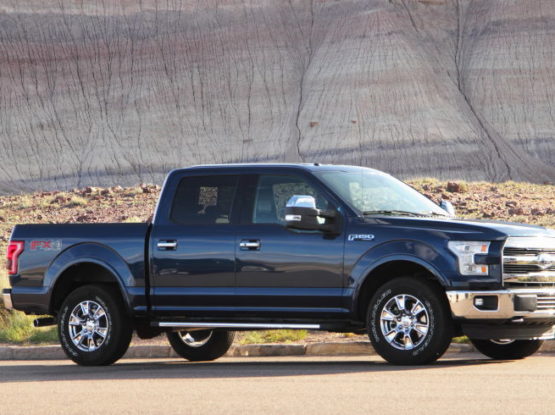
The F150 is a light-duty pickup, ideal for everyday driving, light towing, and weekend projects. The F250 and F350, on the other hand, are heavy-duty trucks built for serious workloads, including towing large trailers, hauling heavy payloads, and handling demanding commercial or recreational use.
If you’re debating F150 vs F250 vs F350, the real decision often comes down to how much weight you need to tow or carry and how often you’ll be pushing the truck to its limits.
Ford F250 vs. F350: The Core Difference
The biggest difference between F250 and F350 comes down to payload capacity and suspension strength.
Both trucks share similar engines, transmissions, frames, and interior options. However, the F350 is engineered to handle heavier payloads and higher towing demands thanks to stronger rear suspension components and higher-rated axles.
In simple terms, the Ford F250 vs F350 comparison usually looks like this: the F250 is a powerful heavy-duty truck suitable for most towing and hauling needs, while the F350 is designed for maximum capacity, making it better for constant heavy loads or larger trailers.
This distinction is why many buyers researching the f250 vs f350 difference end up choosing based on workload rather than appearance or interior features.
Towing and Payload: F250 vs F350 Differences That Matter
When comparing f250 vs f350 for towing and payload, the gap becomes clearer.
The F350 typically offers a higher payload rating, which is especially important if you plan to haul heavy equipment, truck campers, or fifth-wheel trailers. While both trucks can tow substantial weight, the F350 provides more margin for safety and stability under heavy loads.
If you’re frequently towing large trailers or hauling heavy materials, the f350 vs f250 conversation often favors the F350 for long-term durability and peace of mind. That’s a major reason people searching for f250 vs f350 differences end up leaning toward the higher-rated platform.
Ride Comfort and Daily Driving
For everyday driving, the F250 and F350 feel very similar. Both offer comparable interiors, technology, and comfort features. However, the F350’s heavier suspension can feel slightly stiffer when the truck is unloaded.
If you’re using your truck as a daily driver and only tow occasionally, many drivers prefer the F250 for its slightly more forgiving ride. That said, the difference is subtle, and both trucks are designed to handle daily use without issue.
Cost and Ownership Considerations
Another key factor when evaluating ford f250 vs f350 is cost.
The F350 generally costs more upfront and may come with slightly higher registration or insurance costs depending on your state. However, if you need the additional capacity, that added cost can be well worth it—especially if it helps prevent overloading your truck.
For buyers asking “what’s the difference between f250 and f350?” or “what’s the difference between f250 and f350?”, budget and real-world usage often matter just as much as the spec sheet.
Which Truck Is Right for You?
Choosing between the f250 vs f350 comes down to how you plan to use your truck.
The F250 is a strong fit if you want heavy-duty capability for towing and hauling, but you won’t constantly run at max payload. It’s a popular choice for contractors, recreational towers, and drivers upgrading from an F150.
The F350 is a better match if you routinely haul heavy payloads, tow large trailers, or want maximum capacity with fewer limitations. It’s built for demanding jobs and frequent heavy-duty use, which is why it often wins out in the f350 vs.f250 decision for high-load applications.
If you’re also comparing f150 vs. f250 vs. f350, keep in mind that moving up the lineup increases capability, but it also increases size, weight, and ownership costs. The best truck is the one that matches your day-to-day needs without being overkill.
Keep Your Ford Truck Running Strong
No matter which Super Duty you choose, proper maintenance is critical to long-term reliability. Heavy-duty trucks work hard, and regular service helps prevent costly repairs down the road.
At Paul’s Auto Repair, we help truck owners stay ahead of issues with routine maintenance, advanced diagnostics, and reliable repairs. If you’re considering a Ford Super Duty or already own one, our team is here to help keep it performing at its best.
Contact Paul’s Auto Repair today to schedule service or get expert advice on caring for your Ford truck.