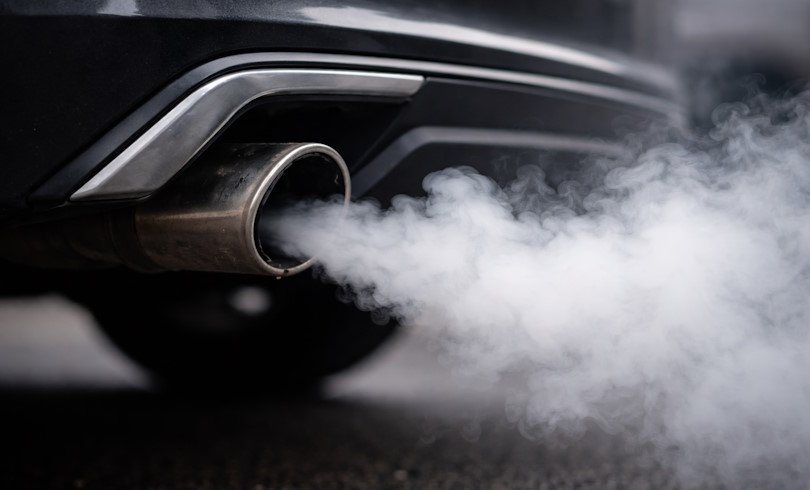
Seeing white smoke from your exhaust when accelerating? In many cases, it’s harmless condensation burning off — especially during cold weather. But if the white smoke is thick, persistent, or accompanied by coolant loss, overheating, or a sweet smell, it could signal a more serious issue like a blown head gasket, cracked engine block, or coolant leak. Knowing the difference can help you avoid major engine damage.
Let’s break down exactly what causes white smoke from exhaust, when it’s normal, and when you should schedule service.
Is White Smoke From Exhaust When Accelerating Normal?
Sometimes, yes.
When your engine is cold — especially during fall and winter — condensation builds up inside the exhaust system. As the engine warms up, that moisture turns into steam and exits the tailpipe.
Normal White Exhaust Smoke:
- Light and thin
- Disappears after a few minutes
- Most noticeable on cold starts
- No strange smells
- No warning lights
If this sounds like what you’re seeing, there’s usually nothing to worry about.
However, if you notice white smoke coming from exhaust when accelerating after the vehicle is fully warmed up, it may point to something more serious.
What Causes White Smoke From Exhaust?
Here are the most common causes:
1. Coolant Leak (Most Common Serious Cause)
If coolant enters the combustion chamber, it burns along with fuel and air — producing thick white smoke.
Signs of a Coolant Leak:
- Sweet smell from exhaust
- White smoke that lingers
- Low coolant levels
- Engine overheating
- Milky oil (possible head gasket failure)
This is often caused by:
- Blown head gasket
- Cracked cylinder head
- Cracked engine block
If you’re asking, “Why is there white smoke coming out of my exhaust?” and it doesn’t go away, this is the first thing a technician will check.
Ignoring this issue can lead to catastrophic engine damage.
2. Blown Head Gasket
A blown head gasket allows coolant to leak into the combustion chamber.
When this happens, you may notice:
- Thick white smoke from exhaust when accelerating
- Bubbles in radiator or coolant reservoir
- Loss of engine power
- Rough idling
- Engine overheating
Head gasket repairs can be expensive — but catching the issue early can prevent complete engine failure.
3. Faulty Fuel Injector (Less Common)
In rare cases, excess fuel entering the combustion chamber can create a white or grayish smoke appearance, especially under acceleration.
Signs include:
- Rough acceleration
- Misfires
- Decreased fuel efficiency
- Check engine light
4. Transmission Fluid (Automatic Vehicles)
Some vehicles use a vacuum modulator. If it fails, transmission fluid can leak into the intake manifold and burn, creating white smoke.
You may also notice:
- Slipping transmission
- Low transmission fluid
- Harsh shifting
Why Is There White Smoke Coming Out of My Exhaust Only When Accelerating?
If the white smoke appears specifically during acceleration, that typically means:
- Increased engine load is forcing coolant into the combustion chamber
- A head gasket leak becomes more noticeable under pressure
- Fuel mixture imbalance worsens under throttle
Acceleration increases cylinder pressure, which can push fluids into areas they shouldn’t be.
If you notice white smoke from exhaust when accelerating, especially combined with overheating or coolant loss, don’t wait.
What Happens If You Ignore White Smoke?
Driving with persistent white exhaust smoke can lead to:
- Severe overheating
- Warped cylinder heads
- Engine seizure
- Complete engine replacement
What starts as a gasket repair can turn into a multi-thousand-dollar engine rebuild if left unchecked.
How a Professional Diagnosis Helps
At Paul’s Auto Repair, we’ll perform:
- Cooling system pressure testing
- Combustion leak testing
- Engine compression testing
- Computer diagnostics
- Visual inspection for leaks
Our goal is to determine whether the white smoke is harmless steam — or a sign of internal engine damage.
When Should You Schedule Service?
Call for an inspection if:
- The smoke is thick and doesn’t disappear
- You smell something sweet or unusual
- Coolant levels are dropping
- Your temperature gauge rises
- The check engine light turns on
If you’re unsure what causes white smoke from exhaust, it’s always better to have it checked sooner rather than later.
Don’t Ignore White Smoke From Exhaust When Accelerating
While some white smoke is completely normal, persistent or heavy white smoke is not. The sooner you diagnose the issue, the better your chances of avoiding major engine damage.
If you’re experiencing white smoke coming from exhaust when accelerating, bring your vehicle to Paul’s Auto Repair for a professional inspection. Our experienced technicians will pinpoint the problem and get you safely back on the road.