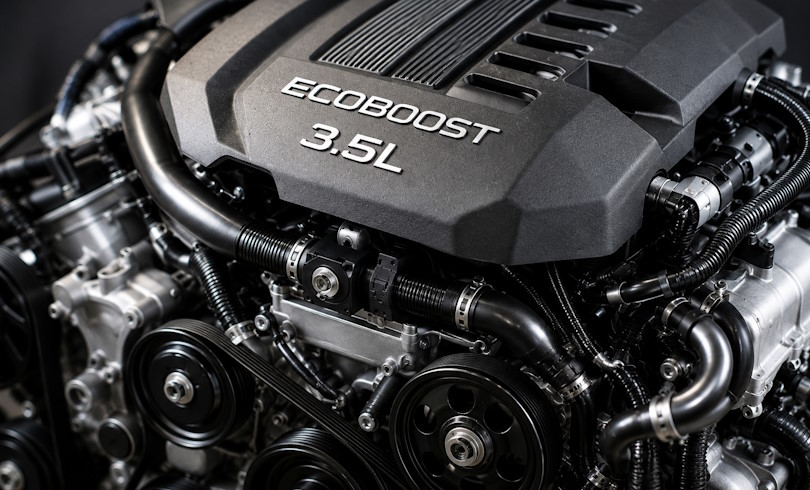
The Ford 3.5L EcoBoost has earned a reputation as one of Ford’s most capable and powerful engines. Found in popular vehicles like the Ford F-150, Expedition, Explorer, Lincoln Navigator, and Raptor, it delivers impressive horsepower, excellent towing capability, and surprisingly good fuel economy for its size.
However, like any engine, it isn’t without its weaknesses. While many 3.5 EcoBoost engines easily exceed 200,000 miles with proper maintenance, there are several well-known issues that owners should understand before they become expensive repairs.
At Paul’s Auto Repair, we regularly service EcoBoost-powered Ford vehicles and help drivers identify potential issues before they turn into major engine repairs.
Are the Ford 3.5 EcoBoost Engines Reliable?
Overall, yes.
The 3.5 EcoBoost is considered a reliable engine when it’s properly maintained. Many serious issues stem from delayed maintenance, infrequent oil changes, or ignoring early warning signs. Ford also updated many components over the years, improving the reliability of later-generation engines. However, there are some common 3.5 EcoBoost problems you may encounter with your vehicle:
Common 3.5 EcoBoost Problems
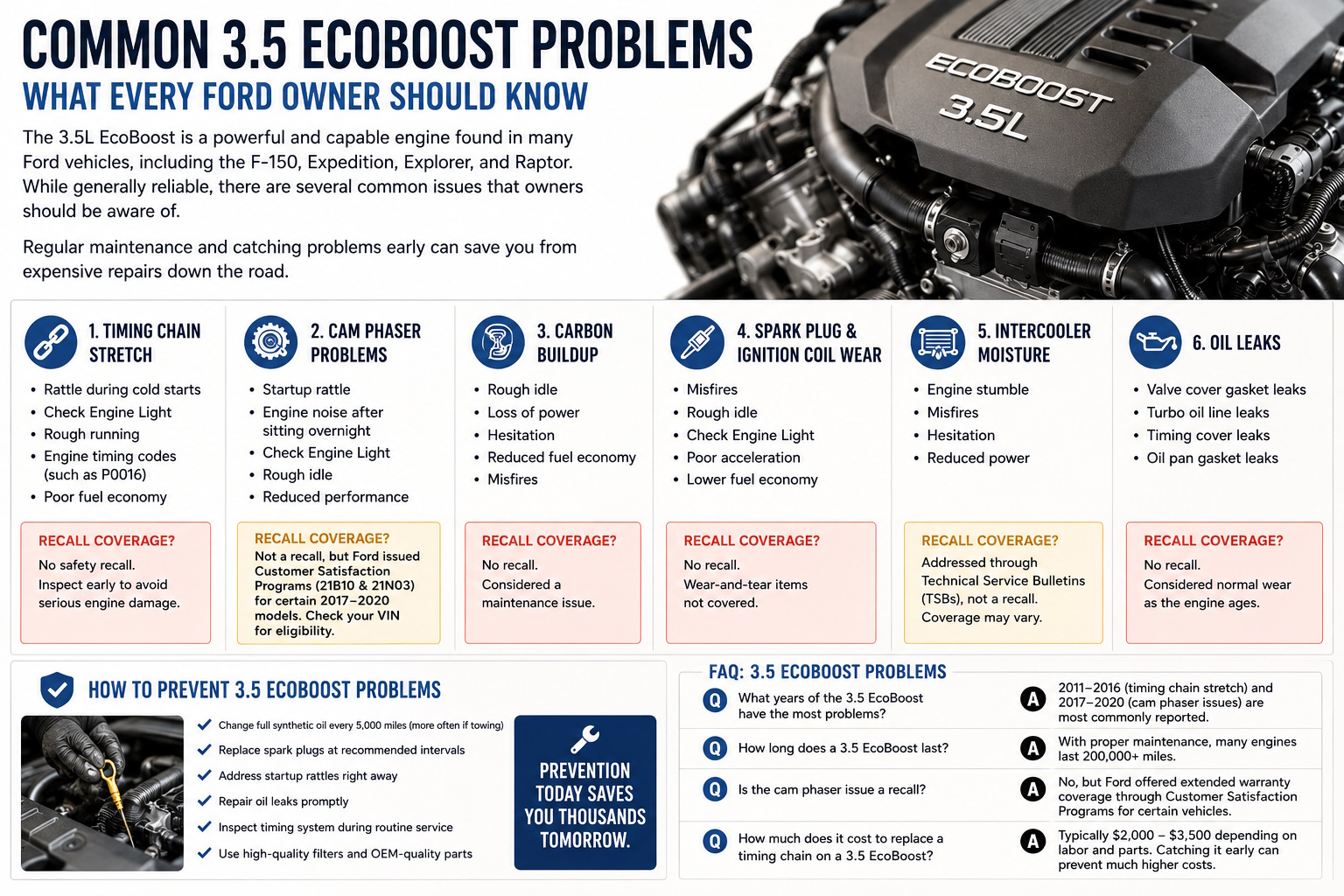
1. Timing Chain Stretch
One of the most common problems with the first-generation 3.5 EcoBoost (primarily 2011-2016) is timing chain stretch.
Over time, wear on the timing chain and related components can cause the engine timing to drift out of specification.
Symptoms include:
- Rattle during cold starts
- Check Engine Light
- Rough running
- Poor fuel economy
- Engine timing codes such as P0016
If ignored, a stretched timing chain can eventually skip timing and lead to severe engine damage.
There is currently no Ford safety recall covering timing chain stretch on the 3.5 EcoBoost. Owners experiencing these symptoms should have the engine inspected as soon as possible to prevent additional damage. Some vehicles may have Technical Service Bulletins (TSBs), but these are different from recalls and typically are not free repairs outside of warranty. :contentReference[oaicite:0]{index=0}
2. Cam Phaser Problems
If you’ve ever heard a loud metallic rattle for a few seconds immediately after starting your truck, cam phasers may be the culprit.
This issue is especially common on many 2017-2020 3.5 EcoBoost engines.
Common symptoms include:
- Brief startup rattle
- Engine noise after sitting overnight
- Check Engine Light
- Rough idle
- Reduced engine performance
Cam phasers control valve timing, and when they begin to fail they can negatively affect engine performance.
This issue was not covered by a traditional recall. However, Ford issued several Customer Satisfaction Programs (21B10 and 21N03) for certain 2017-2020 F-150, Expedition, and Navigator models. Depending on the VIN, mileage, and timing, Ford covered a PCM update and, in some cases, cam phaser replacement under an extended warranty program. Many of these programs have now expired, so owners should check their VIN with Ford to determine eligibility. :contentReference[oaicite:1]{index=1}
3. Carbon Buildup
Early 3.5 EcoBoost engines use direct fuel injection, which means gasoline no longer washes over the intake valves.
Over time, oil vapors can leave heavy carbon deposits behind.
Symptoms include:
- Rough idle
- Loss of power
- Hesitation during acceleration
- Reduced fuel economy
- Misfires
Professional intake valve cleaning can often restore lost performance. Later-generation EcoBoost engines added both direct and port fuel injection, significantly reducing carbon buildup.
Carbon buildup is considered a maintenance-related issue and is not covered under any Ford recall.
4. Spark Plug and Ignition Coil Wear
Turbocharged engines place greater demands on ignition components than naturally aspirated engines.
As a result, EcoBoost engines often require spark plug replacement more frequently.
Symptoms include:
- Engine misfires
- Rough idle
- Reduced fuel economy
- Check Engine Light
- Poor acceleration
Replacing spark plugs on schedule often prevents ignition coil failures and helps maintain performance.
Spark plugs and ignition coils are considered normal wear-and-tear items and are not covered by a Ford recall.
5. Intercooler Moisture
Some earlier EcoBoost-equipped trucks experienced moisture collecting inside the intercooler.
Under certain driving conditions, this moisture could be pulled into the engine, causing:
- Engine stumble
- Misfires
- Hesitation
- Reduced power
Ford released software updates and intercooler improvements for many affected vehicles.
This concern was generally addressed through Technical Service Bulletins (TSBs) rather than a nationwide safety recall. Depending on your vehicle’s VIN and warranty status, repairs may or may not have been covered.
6. Oil Leaks
As EcoBoost engines age, seals and gaskets can begin to leak.
Areas commonly inspected include:
- Valve cover gaskets
- Turbo oil lines
- Timing cover
- Oil pan gasket
Catching oil leaks early can help prevent larger repairs later.
Oil leaks caused by worn seals and gaskets are not covered by a Ford recall and are considered routine repairs as the vehicle ages.
How to Prevent 3.5 EcoBoost Engine Problems
Fortunately, many common 3.5 EcoBoost problems can be minimized with proper maintenance.
- Change full synthetic oil every 5,000 miles (especially if towing)
- Replace spark plugs at recommended intervals
- Investigate startup rattles immediately
- Repair oil leaks promptly
- Inspect the timing system during routine service
- Use high-quality filters and OEM-quality replacement parts
Routine maintenance is far less expensive than replacing timing components or repairing internal engine damage.
3.5 EcoBoost Warning Signs You Shouldn’t Ignore
If your Ford is showing any of these symptoms, it’s time to schedule an inspection:
- Cold start rattles
- Check Engine Light
- Engine misfires
- Loss of power
- Poor fuel economy
- Knocking or unusual engine noises
Early diagnosis can often prevent much more expensive repairs.
Trust Paul’s Auto Repair for EcoBoost Service
Whether your Ford F-150 has a startup rattle, a check engine light, or simply needs routine maintenance, Paul’s Auto Repair has the experience to properly diagnose and repair Ford 3.5 EcoBoost problems.
From timing chain inspections and cam phaser repairs to ignition system service, carbon buildup cleaning, and complete engine diagnostics, our experienced technicians help keep your Ford running reliably for years to come.
If you’re experiencing common problems with the 3.5 EcoBoost, contact Paul’s Auto Repair today to schedule an inspection before a small issue becomes a major repair.
Frequently Asked Questions About the 3.5 EcoBoost
What years of the 3.5 EcoBoost have the most problems?
While every generation of the 3.5 EcoBoost has proven to be capable and reliable, certain model years have experienced more reported issues than others. Early first-generation engines (primarily 2011-2016) are more commonly associated with timing chain stretch and carbon buildup, while many 2017-2020 models experienced cam phaser concerns. Ford addressed many of these issues through design improvements, Technical Service Bulletins (TSBs), and Customer Satisfaction Programs on select vehicles.
How long does a Ford 3.5 EcoBoost engine last?
With proper maintenance, it’s not uncommon for a Ford 3.5 EcoBoost engine to last 200,000 to 300,000 miles or more. Regular oil changes using full synthetic oil, timely spark plug replacement, and addressing engine problems early are key factors in maximizing engine life.
Is the cam phaser problem covered under a Ford recall?
Not exactly. The cam phaser issue is not covered by a nationwide safety recall. However, Ford issued several Customer Satisfaction Programs and extended warranty coverage for certain 2017-2020 F-150, Expedition, and Lincoln Navigator models. Coverage depends on your vehicle’s VIN, model year, mileage, and whether the program is still active. Your local Ford dealer can verify eligibility.
How much does it cost to replace a timing chain on a 3.5 EcoBoost?
Timing chain replacement costs can vary depending on the model year and the extent of the repair, but most owners can expect to spend between $2,000 and $3,500. Replacing the timing chain before it causes additional engine damage is typically much less expensive than repairing a failed engine.
Are Ford 3.5 EcoBoost problems expensive to repair?
Some repairs are relatively inexpensive, while others can become costly if ignored. Spark plug replacement and routine maintenance are generally affordable, but timing chain repairs, cam phaser replacement, and turbocharger-related repairs can become significant expenses. Identifying symptoms early is the best way to minimize repair costs.
What are the first signs of 3.5 EcoBoost engine problems?
Some of the earliest warning signs include a rattling noise during cold starts, rough idling, engine misfires, reduced fuel economy, hesitation during acceleration, oil leaks, and an illuminated Check Engine Light. Having these symptoms inspected promptly can often prevent more serious engine damage.
Can regular maintenance prevent common 3.5 EcoBoost problems?
Yes. Following Ford’s maintenance schedule and performing oil changes every 5,000 miles (especially for vehicles used for towing or heavy-duty driving), replacing spark plugs on schedule, repairing oil leaks quickly, and investigating unusual engine noises can significantly reduce the likelihood of major repairs.
Should I buy a used Ford with the 3.5 EcoBoost engine?
For many drivers, the answer is yes. The 3.5 EcoBoost has proven to be a powerful and dependable engine when properly maintained. Before purchasing a used vehicle, it’s wise to have it inspected by a trusted repair shop to check for timing chain wear, cam phaser noise, oil leaks, service history, and any outstanding recalls or Customer Satisfaction Programs.
How can I find out if my Ford has an open recall or Customer Satisfaction Program?
The easiest way is to enter your Vehicle Identification Number (VIN) on Ford’s recall website or contact your local Ford dealership. They can verify whether your vehicle has any open safety recalls, Technical Service Bulletins (TSBs), or Customer Satisfaction Programs that may apply.